Why First-Gen Professionals Need a Mental Health Retreat

If you grew up as a child of immigrants, you likely missed out on a typical childhood.
You translated.
You helped your parents fill out paperwork.
You carried adult worries in a small body.
As a First-Gen daughter of immigrants, I spent three months each year in Mexico with my grandmother. It was the only place I could truly relax—no translating, no responsibilities, no pressure to be the “perfect” or “high-achieving” child. Just play, fiestas, bus rides to nearby pueblos, and small Barbie trinkets she bought me.
Looking back, that was my first mental health retreat.
Today, I firmly believe First-Gen professionals need intentional wellness retreats focused on restoration, nervous system regulation, and comunidad. This post explores why such retreats are not a luxury but a vital act of healing.
Understanding First-Gen Burnout and the Nervous System
The Hidden Weight Children of Immigrants Carry
Many First-Gen adults grew up carrying constant responsibility.
You were often:
The translator
The emotional support system
The “good child.”
The overachiever
Even without explicit requests, you felt the weight of it all.
This constant urgency wires the nervous system into survival mode. When love is tied to performance and safety to productivity, rest feels unsafe and slowing down feels selfish.
For many First-Gen clients, burnout isn’t visible breakdown but high-functioning exhaustion. It shows as late-night emails, guilt over taking PTO, or the fear that stopping will cause everything to collapse.
We weren’t meant to face this alone.
A mental health retreat offers First-Gen professionals what many lacked growing up: permission to soften.
A Licensed Therapist’s Thoughts on Retreats for First-Gens
Why Retreats Support Nervous System Regulation and Healing
As a trauma-informed therapist who works with First-Gen high achievers, I’ve seen how powerful taking intentional breaks can be.
Stepping away from daily routines, commutes, deadlines, and constant notifications allows your nervous system to recalibrate. Research shows immersive restorative environments lower cortisol and improve mood regulation (e.g., Harvard Health studies on stress and relaxation response). (Publishing, 2019)
A wellness retreat does three powerful things:
It interrupts survival mode.
You step away from urgency and let your body feel safe again.It creates embodied learning.
Instead of thinking “I should journal” or “I should meditate,” you actively practice these tools within a community.It restores cultural connection.
Many retreats include community, storytelling, music, food, and nature—things that help us feel connected to our identity and where we belong.
Regulation involves more than breathing exercises; it requires a supportive environment, safety, and feeling held. For many First-Gen adults, being held without the burden of holding others is transformative.
5 Benefits of a Mental Health Retreat for First-Gen Professionals
Reasons to Say Yes to Recharging
If you’re considering a wellness retreat, here’s what you might gain:
1. Restoration and Deep Rest
You give your body, mind, and soul a restorative break. Stepping away from daily demands lets emotional and physical systems reset. Your nervous system relearns that constant vigilance isn’t necessary.
Remember: Descansar es resistencia.
2. Practicing New Mental Health Habits
Many First-Gen professionals say, “I don’t have time.”
A retreat gives you a structured space to try things like:
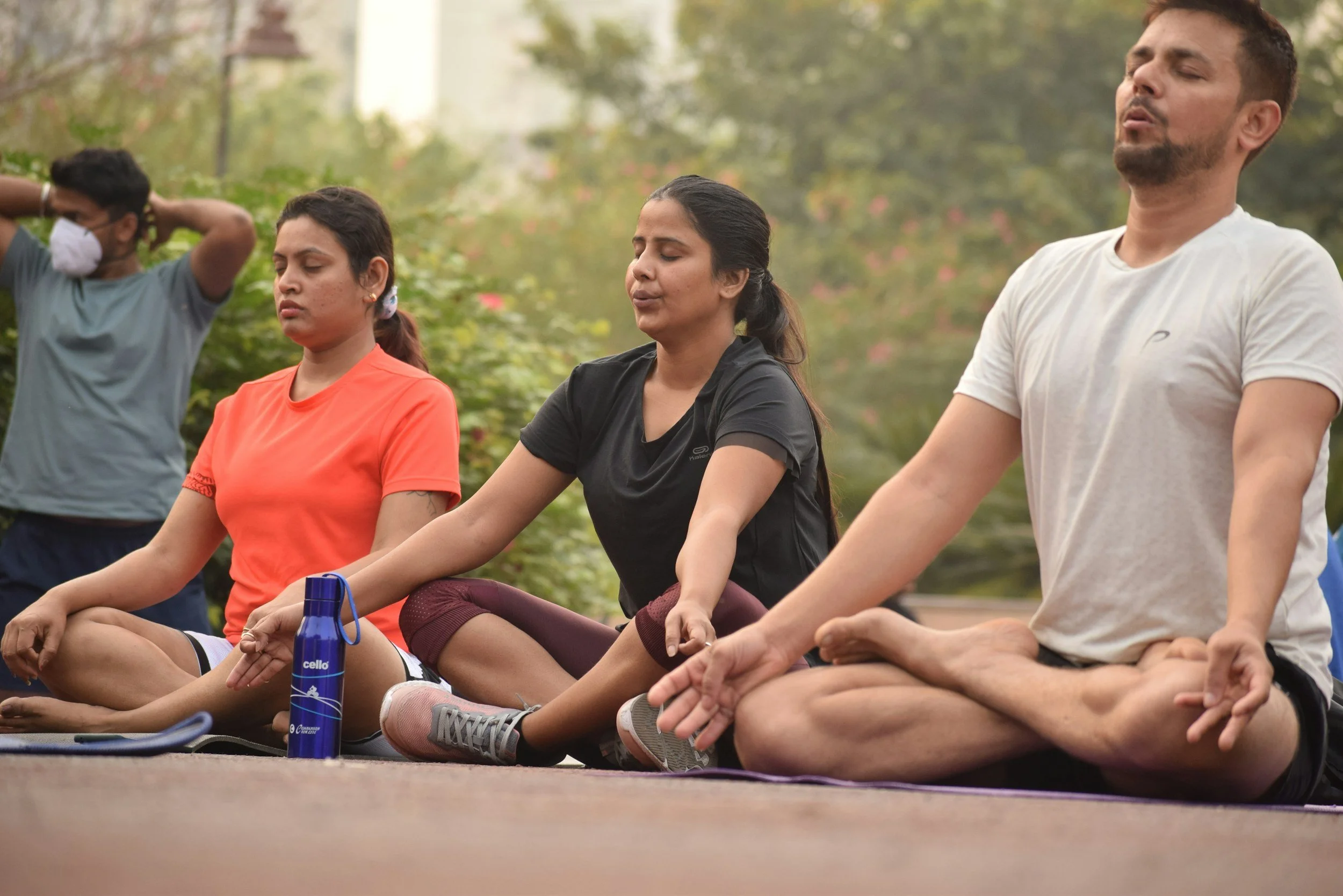
Yoga
Guided journaling
Breathwork
Meditation
Cooking or cultural food rituals
After several days of practice, your body identifies what supports you. You leave with micro-habits you can sustain.
3. Stepping Away from Chronic Urgency
Harvard Health Publishing (n.d.) explains that stress triggers physiological changes preparing us for perceived threats. If your baseline is rushing through work, obligations, and family duties, your nervous system may interpret events like an email from your boss as threats.
Retreats intentionally slow the pace with longer exhales, nature walks, and phone-free time. This alone can lower heart rate, blood pressure, and restore emotional balance. (Bat, 2021)
4. Reconnecting with Nature
Being near the ocean, in the woods, or just around greenery has clear mental health benefits. Spending time in nature is linked to better mood and less stress (American Psychological Association [APA], 2025).
For city dwellers, especially during long winters like in Chicago, reconnecting with nature can ease seasonal depression and calm the nervous system.
5. Building Comunidad
Healing alone is hard. At a retreat, you meet other First-Gen adults who share similar experiences: high-achieving, sensitive, responsible, and sometimes just plain tired.
Community offers validation: “You’re not dramatic. You’re dysregulated. And that makes sense.”Sometimes, lifelong friendships start here.
You Deserve a Mental Health Retreat
If you took on adult responsibilities too early, a mental health retreat may not be indulgent but reparative.
A retreat can deliver:
Restoration
Nervous system regulation
Cultural grounding
Community
Space to remember who you are beyond productivity
Before you decide, ask yourself:
Do my body, mind, and soul need to recharge?
What is my nervous system asking for right now?
¿Qué sentiría al llegar plenamente… sin prisa?
If you’re feeling curious, follow that curiosity matters.
This March, I will facilitate journaling and meditation classes at my first wellness retreat in Cabos San Lucas, Mexico. I was invited by Sin Titulo, a wellness and mental health brand in Chicago. It is such an honor to be able to travel and support other individuals in their healing journey through restorative practices at this wellness retreat. If you’re considering a mental health retreat, feel free to contact me with any questions.
You don’t have to carry it all alone.
Con Gratitud,
Daisy Gomez, LCPC
Licensed Mental Health Therapist in Illinois
References:
Publishing, H. H. (June 30, 2019). A 20-minute nature break relieves stress. Harvard Health. https://www.health.harvard.edu/mind-and-mood/a-20-minute-nature-break-relieves-stress
Harvard Health Publishing. (n.d.). Understanding the stress response. Harvard Medical School. https://www.health.harvard.edu/staying-healthy/understanding-the-stress-response
Nurtured by Nature. American Psychological Association.(April 8, 2025). Retrieved February 23, 2026, from https://www.apa.org/monitor/2020/04/nurtured-nature